


My cousins and I were enjoying a carefree summer day as we often did at my grandparents house in Wisconsin—building sand castles, swimming in the lake, and pushing each other off the old wooden raft that floated a good distance from the dock.
I was young, but I remember the details of this particular day like it was yesterday—specifically, the moment I took off doggy paddling to race my cousins to the raft.
All was well until a large boat drove dangerously close to the swimming area, creating massive waves in its wake. Before I knew what had hit me, I was knocked under the water faster than I could come up for air. Each time I tried to call for help, water would fill my mouth before sound could escape. It wasn’t long before panic set in and the threat of drowning inched terrifyingly close.
Suddenly, one of my older brothers dove into the lake and attempted to lift me above the waves. But regardless of his brave attempts, he wasn’t strong enough to fight against their frequency and power. Finally, after what seemed like hours of gasping for air, I felt a strong hand grip my arm. I was hoisted onto someone’s shoulders and carried above the waves.
The lifeguard had heard our muffled cries for help, and before we knew it, my brother and I collapsed in exhaustion on the dock as we coughed up water and gasped for air.
Needless to say, it was a long time before I was willing to get my toes wet, let alone jump into the lake with confidence. In fact, my near-drowning experience left me with a fear of open water that I still battle to this day. For this reason, there’s an account in Mark 14:25–33 that’s always been relatable for me. If you aren’t familiar with the story, this is how Mark recounts that life-changing day on the lake:
And in the fourth watch of the night he [Jesus] came to them, walking on the sea. But when the disciples saw him walking on the sea, they were terrified, and said, “It is a ghost!” and they cried out in fear. But immediately Jesus spoke to them, saying, “Take heart; it is I. Do not be afraid.” And Peter answered him, “Lord, if it is you, command me to come to you on the water.” He said, “Come.” So Peter got out of the boat and walked on the water and came to Jesus. But when he saw the wind, he was afraid, and beginning to sink he cried out, “Lord, save me.” Jesus immediately reached out his hand and took hold of him, saying to him, “O you of little faith, why did you doubt?” And when they got into the boat, the wind ceased. And those in the boat worshiped him, saying, “Truly you are the Son of God.”
Oh, Peter. He started off so confident, so courageous, so full of faith. But like my own infamous day on the lake, his confidence was quickly swallowed up by the waves.
Thankfully, that wasn’t the end of the story for me—or for Peter. Fear and doubt might have consumed him for a moment, but Jesus didn’t leave him to suffer the natural consequences of his faltering faith. No, his grace proved to be greater than the waves and the fears they invoked. And the same is true for us.
THREE TEMPTATIONS WHEN FOCUS IS ASKEW
This passage in Mark is one of my favorites because it’s laced with the compassion of Jesus toward Peter as he gives in to fear and doubt. One moment Peter seems so full of supernatural faith. The next moment, he seems so…human.
But Jesus’s response to his faltering faith is an encouragement to us all. There are a few ways this interaction helps us recognize our own temptations when circumstances threaten to drown us.
1. We’re tempted to rationalize, rather than walk by faith.
The wind was whipping against their faces, the waves were battering the boat, and all the disciples could see was a figure in the distance walking toward them on the water. It makes me chuckle that, despite seeing Jesus’s miracles, their first reaction was to say, “It is a ghost!” and cry out in fear. In their panic, they weren’t looking for Jesus, so when they saw him, they didn’t recognize him.
If you’re anything like me, you know this temptation all too well. When my body is paralyzed in pain, I desperately want to know the cause and solution. When disappointment seems to lurk around every corner, I’m tempted to self-protect by cynically expecting disappointment to come; and when my hard work appears fruitless, I ruminate about all the ways I could have achieved a better result. In other words, if I can’t control the waves, then maybe I can at least make sense of them.
But Jesus isn’t bound to rationality like the disciples were (and like we are). He is God.
And yet, as we see in his response, he shows grace toward their off-base conclusions and fear-filled reactions: “But immediately Jesus spoke to them. ‘Have courage! It is I. Don’t be afraid’” (Mk. 14:27).
2. We’re tempted to put God to the test.
Immediately after Jesus assured them of his presence, Peter replied, “Lord, if it’s you, command me to come to you on the water” (Mk. 14:28).
Peter let the temptation to question Jesus’s assurance get the best of him. He heard Jesus’s voice, but how could he know if it was really him? So he challenged Jesus by saying, “If it’s really you, prove it by giving me the power to walk on water.”
Despite Peter’s boldness to question the Lord, Jesus granted Peter’s request and commanded him to come.
How often do we know the promises God has told us throughout his Word, and yet we still want to put those promises to the test? For example, we may believe his promise to provide, but when we don’t see any logical way for that provision to come, we get spiritual tunnel vision: “If you’re really who you say you are, show me you’ll provide by ___ [insert the outcome that makes the most sense to you].”
However, what happens if he doesn’t grant our specific request, but instead plans to provide in a way that’s beyond our vantage point? We’ll either doubt his promises and power or be forced to learn that the timing and ways of his promises don’t make sense to our limited understanding. For example, I’m tempted to dread a major surgery I have to undergo in the next couple of months. That dread can tempt me to put his faithfulness to the test by praying, “Lord, if you’re really my protector, make a way for me to avoid this surgery.” But because we live in a broken world with fallen bodies, God’s protection over me may not be rescuing me from the surgery. Instead, he may protect me through the very thing I wish to avoid. This is yet another opportunity for me to ask Jesus to help me trust him, however that path may look.
3. We’re tempted to focus on the waves.
So Peter got out of the boat and walked on the water and came to Jesus. But when he saw the wind, he was afraid, began to sink, and cried out, “Lord, save me!’” (Mk. 14:29–30). Peter was able to courageously (and miraculously) walk above the waves as long as his focus was fixed on Jesus as the source of his power. But the moment his eyes turned back to the power of the waves, his body and courage began to sink.
It’s an all-too familiar temptation, isn’t it? From our earthly vantage point, when the waves of overwhelming circumstances come crashing down around us, it’s far more natural to fixate on the power of the trials than it is to lift our eyes to the One who has power over them. The temptation is strong because it’s far easier to focus on what we can see in front of us than it is to rest in faith toward what (or Who) we can’t see in a physical sense.
But here’s what encourages me: even when I’m so to prone to give into worry rather than walk confidently in faith, Jesus doesn’t abandon me. Why? Because he’s a God full of grace and compassion toward us, and even “if we are faithless, he remains faithful—for he cannot deny himself” (2 Tim. 2:13). Amazingly, he stands in the waves with us, holding out his hand, ready to meet us with his grace the moment our eyes of dependent faith meet his gaze.
Unlike God, however, our eyes can’t be focused on two places at once. Personally, it’s far easier to focus on the pain that seems to have no end than on the One who’s holding out his hand to give me the strength and help I need to endure whatever he allows. But you and I don’t have to live as victims of fear or faithlessness. With God’s help, we can shift our focus off our circumstances (even if imperfectly) and remind ourselves of the character and promises of God that assure us he is worth trusting. Peter was with Jesus, but if you are a follower of Jesus, you have his Spirit living within you at all times. That means you aren’t reliant on your own strength to change your mindset, but you have the power of God himself to not live as a victim to the doubts within your mind.
How does that look practically?
First, by recognizing the thoughts, doubts, and fears taking up real estate in our minds.
And second, by replacing toxic thoughts with the truth of God’s Word. That may sound trite, but in reality, it’s quite profound—and in many ways, not fully grasped until you’ve experienced it first-hand. I’ve had countless experiences when I was at my wits end, and began rehearsing a short Scripture or praying it back to the Lord in my desperation. Although I can’t fully put words to the experience, I’ve found a strange sense of peace in circumstances that were far from peaceful. And as I looked back at numerous unbearable moments, I can honestly say that I don’t know how I endured them—other than the fact that somehow, in ways I can’t fully comprehend, God simply carried me through them.
Friends, God’s power may be mysterious, but it’s not out of reach. We have the amazing privilege of talking to the Lord honestly about our fears and worries, and asking for his strength to trust him more than what we can make sense of. Some days, it’s a moment-by-moment practice to bring Jesus our every doubt, fear, and worry in exchange for the peace, courage, and faith only he can give.
The good news is, Jesus doesn’t require us to get our act together before we can receive his help. After all, he didn’t save us because we deserved it or asked him to; he saved us because he loved us enough to sacrifice himself for us when we didn’t even know we needed saving. All that’s required of us is to follow in the footsteps of Peter and cry out to Jesus in our moment of need.
Consider the urgency and desperation in Peter’s response. He didn’t waste time rationalizing his doubts, treading water in his own strength, or yelling for the disciples to throw him a life raft. He cried out to Jesus in desperation with three simple words: “Jesus, save me!” And without hesitation, the Lord did: “Immediately Jesus reached out his hand, caught hold of him, and said to him, “You of little faith, why did you doubt?” (Mk. 14:31).
“Jesus, save me!” can be our prayer as well. When we cry out to the Lord, even if our faith is hanging on by a thread, Jesus doesn’t hesitate. He grabs hold of us and lifts us above the waves. But he does more than just rescue us.
He pursues our hearts and calls us to greater faith.
WAVES THAT LEAD TO WORSHIP
“When they got into the boat, the wind ceased. Then those in the boat worshipped him and said, ‘Truly you are the Son of God” (v.33). As much as we prefer avoiding the waves of life than being called to endure them, God never wastes the storms he allows. In Mark, the same storm that threatened to drown Peter became a platform that displayed God’s patience and grace toward a floundering faith, and his power and glory over all things.
Not only do the storms of life stretch our faith and teach us to fix our eyes on the power of Jesus, they are meant to lead us—and those watching—to worship the God of all grace.
Even when the temptation to focus on our circumstances is strong, there is One who is stronger. We can call out to him for help, and before a sound has left our lips, it has already reached his ears and brought him near (Is. 65:24).
In response, God will either work a miracle by changing our circumstances or he’ll work a greater miracle by changing us instead. The first will only guard our faith until the next storm hits. The latter will strengthen our faith so that we won’t be as rocked when it does, leading us to a deeper trust in our Savior and causing others to stop and wonder, Who is this Jesus who gives peace beyond understanding? Who is this God with power over the wind and the waves?
Friend, are you overcome by the storms today? Are you gripped by panic over what you can’t control? Your temptation to focus on the waves may be powerful, and the winds may be stronger than you can bear, but the power of Jesus is greater than both.
Cry out to him honestly. In his compassion, he will hear you, and like my hero lifeguard, he will reach out his powerful saving hand, take hold of you, and lift you above the waves.
Home is around the corner,
Sarah Walton
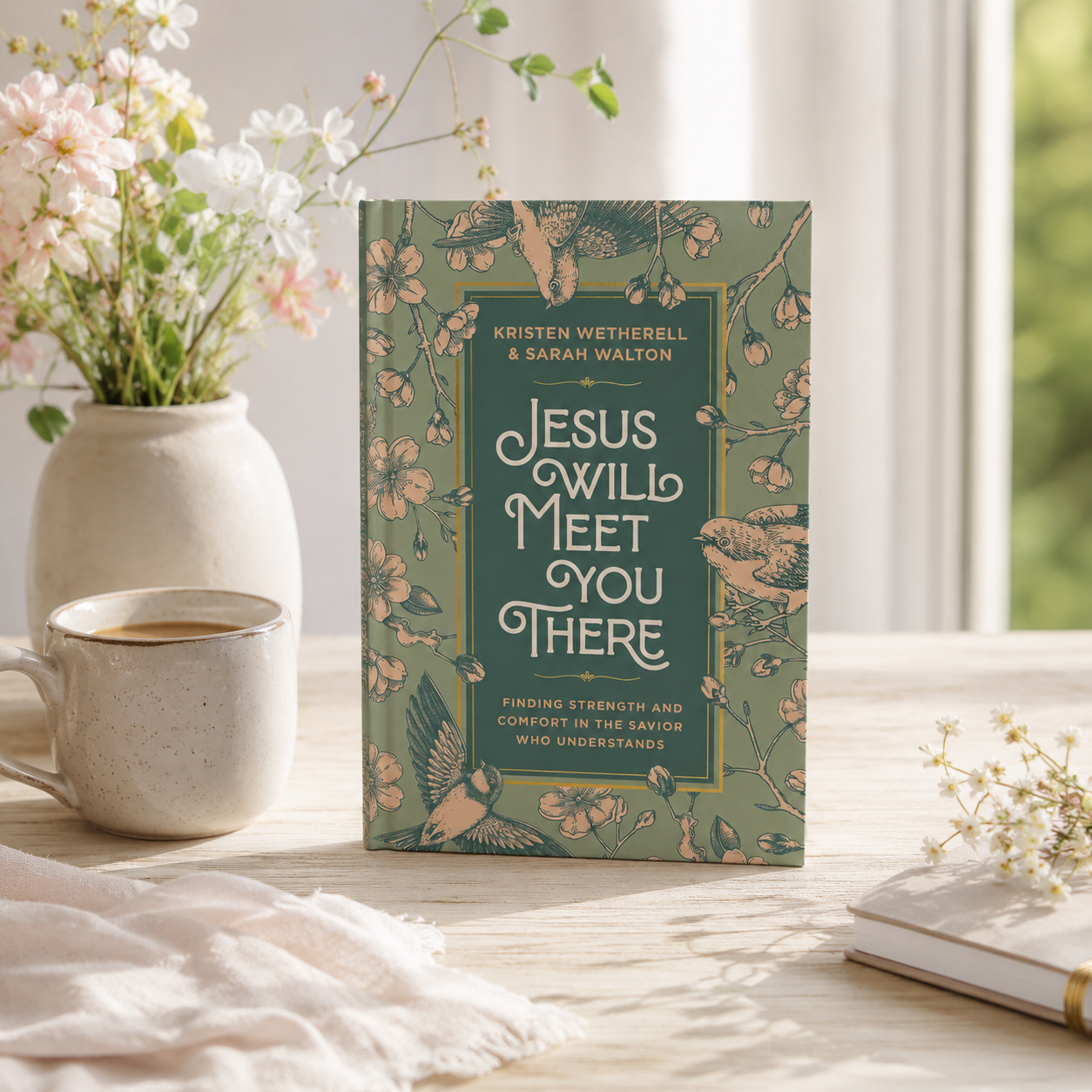
*Bonus chapter from Jesus Will Meet You There.
Jesus Will Meet You There Video Series
Episode 4 Releases Today
Brad Hambrick — On Fear and Shame
I’m excited to share the fourth of six conversations in our “Jesus Will Meet You There” Video Series with men and women I greatly admire. Each video interview coincides with one section of the book, Jesus Will Meet You There. Other conversations include interviews with Laura Wifler, Tim Challies, Jared Wilson, Katie Blackburn (releasing next week), Vaneetha Risner (in two weeks), and a special surprise guest (late June).
Today’s conversation is pastor and counselor, Brad Hambrick, and is centered on the topic of fear and shame. You can watch or listen to that conversation HERE.
Lastly, Jesus Will Meet You There releases in one week!
As a “thank you” to anyone who preorders before June 9th, free bonuses are available on our website. Fill out this formand you will receive access to:
- 5 Exclusive bonus chapters (like this one) that are not published in the print book
- A coordinating and encouraging Spotify playlist that compliments the book content


Sarah, you shared a fabulous analogy comparing your near drowning to Peter’s failed walk on the water. Your reflections on the related scripture and the power of Jesus were wonderfully inspirational. 🙂
LikeLiked by 1 person